Buying guide
Best Yacht for Family of Eight
A family of eight needs a yacht with at least 8–10 berths, multiple head compartments, a galley sized for meal prep, and robust weather protection—typically a 30–45-foot vessel depending on whether you prioritize day-cruising comfort or overnight liveability. Cabin cruisers, express cruisers, and small motor yachts in the 35–50-foot range offer the sleeping capacity and amenities families require, with used models starting around $150,000–$300,000 and new builds ranging $400,000–$3 million. Key factors include engine reliability, fuel efficiency, ease of operation for non-professional crews, and layout versatility; a professional survey is essential before purchase. The best family yachts balance seaworthiness, interior space, and operating costs while accommodating multiple generations comfortably.
What Size Yacht Do You Need for Eight People?
The right size for a family of eight depends on how you plan to use the yacht. For day cruising and weekend trips, a 30–35-foot center console or open express cruiser provides adequate seating and basic galley facilities without the operational complexity of larger vessels. For overnight cruising or week-long vacations, you'll want 40–50 feet minimum to ensure comfortable sleeping arrangements, proper ventilation, and enough galley and head space that the family doesn't feel cramped.
Berth count is the primary sizing metric. Most families of eight include children, so you can use convertible dinettes, cabin bunks, and quarter berths to reach eight sleeping positions. A well-designed 40-footer typically offers a master stateroom (queen or double berth), two or three additional cabins with twins or bunks, and convertible dinette seating—totaling seven to nine berths. Vessels under 35 feet usually max out at five or six berths, forcing some family members to sleep in day-use areas, which works for short trips but becomes impractical for extended cruising.
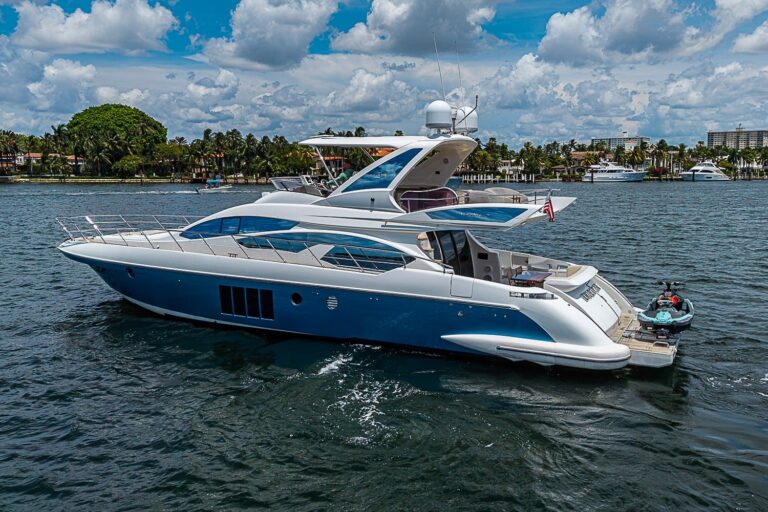
Beam (width) matters as much as length. A beamy 38-footer with a 13-foot beam will feel more spacious below deck than a narrow 42-footer, giving families more usable cabin width and headroom. The 2013 Azimut 64, for example, offers 17.5 feet of beam and multiple staterooms—ideal for families seeking both space and seaworthiness on longer passages.
Which Yacht Types Work Best for Families?
Three main yacht categories suit family cruising: cabin cruisers, express cruisers, and compact motor yachts. Each offers different trade-offs between comfort, speed, fuel economy, and ease of handling.
Cabin Cruisers (30–45 feet) are the workhorse of family boating. They feature a full cabin with separate staterooms, a proper galley, and enclosed heads. Cabin cruisers prioritize comfort over speed, typically cruising at 15–20 knots, which conserves fuel and reduces engine wear. Brands like Grady-White and Sailfish build rugged, seaworthy cabin cruisers with excellent resale value. The 2011 Grady-White Canyon 306 exemplifies this category—a 30-footer with a full cabin, multiple berths, and the durability to handle rough water while remaining fuel-efficient for family budgets.
Express Cruisers (35–50 feet) blend cabin comfort with performance, typically offering 25–30-knot cruise speeds and modern styling. They work well for families who want to cover distance quickly while maintaining overnight comfort. The 2023 Pursuit S 428 Sport represents the upper range—a 42-footer with a full master suite, guest cabin, spacious saloon, and the speed to make long-distance family trips feasible in a single weekend.
Motor Yachts (40–65+ feet) provide the ultimate in comfort and stability for larger families or multi-generational groups. These vessels feature separate crew areas, multiple heads, large galleys, and refined interior finishes. They're ideal if your family includes elderly relatives or if comfort is the priority over fuel economy. The 2025 Azimut Seadeck 6 is a luxury option—a 62-footer with exceptional stability, multiple staterooms, and the amenities to keep a large family content on extended cruises.
What Layout Features Matter Most for Family Cruising?
Interior layout directly impacts how enjoyable family time aboard becomes. Prioritize these features when evaluating vessels for eight people.
Multiple Heads and Showers: With eight people sharing one head, mornings become chaotic. Look for vessels with at least two heads—ideally one ensuite to the master stateroom and one accessible from the main saloon. A shower stall (even a compact one) is essential; families with young children especially appreciate the ability to rinse off after swimming without using the galley sink.
Galley Size and Layout: A family galley needs counter space, a two-burner stove (or better), a full-size refrigerator, and adequate storage for a week's provisions. Galley-forward designs (galley near the companionway) are preferable because they allow the cook to participate in cabin life while preparing meals. Narrow galleys on older vessels often frustrate families accustomed to home kitchens.
Flexible Sleeping Arrangements: Convertible dinettes that fold into berths, cabin bunks, and quarter berths provide flexibility. Some family members may prefer sleeping topside in a convertible saloon, while others need privacy. Cabins with doors (not just curtains) help adults maintain some separation from children during rest periods.
Saloon Size and Visibility: The main saloon is where the family gathers during rough weather or evening hours. A large saloon with good natural light and headroom (at least 6'3" for most adults) prevents the claustrophobic feeling that ruins family trips. Good visibility forward and to the sides helps non-professional crews feel confident at the helm.
Storage and Deck Space: Families accumulate gear—snorkeling equipment, fishing rods, beach toys, luggage. Lockers, lazarettes, and cabin storage should be generous. On-deck space for lounging and water access (swim platform, boarding ladder) is equally important; families want to enjoy the water, not just look at it from inside.
What Are the Fuel and Operating Costs for Family Yachts?
Operating costs are often the hidden shock for new yacht owners. A family boat's annual expenses include fuel, maintenance, insurance, dockage, and periodic haul-outs.
Fuel Consumption: A 35-foot cabin cruiser burning 12–15 gallons per hour at cruise speed, operating 100 hours annually, consumes roughly 1,200–1,500 gallons per year. At current diesel prices ($3.50–$4.50 per gallon), that's $4,200–$6,750 in annual fuel. A 45-footer might burn 20–25 gph, doubling fuel costs. Families should budget $5,000–$10,000 annually for fuel depending on vessel size and usage.
Maintenance and Repairs: Rule of thumb: budget 5–10% of the yacht's purchase price annually for maintenance. A $300,000 boat should have a $15,000–$30,000 annual maintenance reserve. This covers engine servicing, hose replacements, through-hull fittings, electrical system repairs, and the inevitable surprise failures. Older vessels (10+ years) trend toward the higher end.
Insurance: Yacht insurance typically costs $500–$2,000 annually for a $300,000 boat, depending on hull material, age, coverage limits, and captain experience. Families with younger or less-experienced captains may pay premiums at the higher end.
Dockage: Transient slip fees range from $1–$3 per foot per night in most U.S. coastal areas. A 40-footer costs $40–$120 per night, or $1,200–$3,600 monthly for continuous dockage. Many family cruisers anchor out 50–70% of the time to reduce costs.
Haul-Out and Bottom Work: Every 2–3 years, budget $3,000–$8,000 for haul-out, bottom cleaning, and paint. This is non-negotiable for vessel longevity.
A realistic annual operating budget for a family 40-footer: $8,000–$15,000 (fuel, maintenance, insurance, modest dockage). Larger vessels or those used more frequently push toward $20,000–$30,000 annually.
Which Builders Make Reliable Family Yachts?
Reputation for seaworthiness, parts availability, and resale value matters enormously. Several manufacturers dominate the family cruising market.
Grady-White: A North Carolina builder with 75+ years of heritage, Grady-White is synonymous with durable, seaworthy cabin cruisers. Their Canyon and Seafarer series offer excellent stability, conservative design, and legendary resale value. The 2026 Grady-White Canyon 306 is a current-generation model combining proven design with modern electronics and fuel efficiency.
Beneteau: The French builder produces the Antares line of cabin cruisers and the larger Oceanis sailboats. Beneteau vessels are known for comfortable interiors, good ventilation, and European styling. The 2027 Beneteau Antares 11 Fly represents their modern flybridge cabin cruiser offering, blending classic cabin comfort with contemporary features.
Azimut: An Italian luxury builder, Azimut produces motor yachts from 40–180+ feet. Their vessels are known for refined interiors, excellent build quality, and strong resale in the secondary market. Azimut models appeal to families seeking premium comfort and are common in the $500,000–$3 million range.
Pursuit: A South Carolina builder specializing in express cruisers and center consoles, Pursuit offers practical family layouts at mid-market prices. Their S-series sport cruisers blend comfort with performance.
Sailfish: A Florida builder known for affordable, well-built center consoles and cabin cruisers. Sailfish vessels offer good value for families on tighter budgets, with solid construction and simple systems.
Should You Buy New or Used?
The new vs. used decision hinges on budget, warranty needs, and customization desires.
Used Yachts (5–15 years old): Offer the best value for family budgets. A well-maintained 2015–2018 cabin cruiser typically costs 40–60% of new, with most major systems already debugged. Depreciation is slower on used boats, so your resale loss is smaller. The 2015 Sailfish 320 CC exemplifies this segment—a 32-footer at $155,000 that provides proven reliability without the new-boat premium. Used boats allow families to test their boating commitment before investing heavily.
New Yachts: Provide warranty coverage, latest electronics and engines, and customization options. New boats cost more upfront but eliminate surprise repairs in year one and offer modern fuel-efficient engines. New models also include updated safety systems and compliance with current regulations.
Recommendation for Families: If this is your first boat, buy used (5–10 years old) from a reputable builder. You'll save 30–50% versus new, the vessel is proven, and you'll learn whether family boating suits your lifestyle before committing to a new-boat investment. If you're an experienced boater upgrading, new construction makes sense for warranty and customization.
What Should I Look For in a Survey?
A professional marine survey is non-negotiable before purchasing any family yacht. A comprehensive survey examines hull integrity, engine condition, electrical and plumbing systems, and safety equipment—potentially saving you tens of thousands in hidden repairs.
Hire a Certified Marine Surveyor: Verify NAMS (National Association of Marine Surveyors) or SAMS (Society of Accredited Marine Surveyors) certification. Expect to pay $800–$2,500 depending on vessel size and age.
Prioritize These Areas:
- Hull and Structural Integrity: Look for soft spots, delamination, cracks, and water intrusion. The surveyor will use moisture meters and visual inspection to assess hull condition.
- Engine(s) and Transmission: Compression tests, oil analysis, and hour-meter verification reveal engine health. A tired engine can cost $15,000–$40,000 to replace.
- Electrical System: Corroded wiring, undersized batteries, and faulty panels are common in older boats and expensive to fix. The surveyor should verify proper grounding, circuit protection, and battery capacity.
- Plumbing and Through-Hulls: Seacocks, hoses, and through-hull fittings are failure points.
About this guide
General buying information from Fly Yachts, a yacht brokerage in Fort Lauderdale. Prices, costs and specifications are typical ranges, not quotes. Check any boat you are serious about with a survey and your own advisers.
All buying guides