Buying guide
Flybridge vs Sport Yacht
A flybridge yacht features an elevated open-air helm station and seating area above the main deck, offering 360-degree visibility and social entertainment space, while a sport yacht prioritizes a lower profile with a sportier helm design, often emphasizing speed, handling, and a more contemporary aesthetic. Flybridges excel for cruising families who value command visibility and outdoor entertaining; sport yachts suit buyers seeking performance, fuel efficiency, and easier docking in tight spaces. The choice depends on your cruising priorities: if you want to see everything and host guests comfortably while underway, a flybridge delivers; if you prioritize agility, modern styling, and reduced fuel consumption, a sport yacht is the better match. Prices and layouts vary significantly by builder and size—flybridges typically command premiums for their dual-helm versatility, while sport yachts often deliver more value in the 40–55-foot range.
What Is the Core Difference Between a Flybridge and Sport Yacht?
The fundamental distinction lies in layout philosophy and intended use. A flybridge yacht dedicates significant topside real estate to an elevated helm and lounge area, creating a secondary command center and social hub. This upper deck is typically open or partially covered, with helm seating facing forward for maximum sight lines. The main deck below houses the salon and staterooms, with a lower helm station often mirrored below.
A sport yacht, by contrast, consolidates the helm and primary living spaces into a single, integrated level. The design emphasizes a sleek, low-slung profile—often with a sportier windscreen and more compact superstructure. Sport yachts typically feature a single, well-appointed helm (not dual), and prioritize performance metrics like speed, fuel economy, and maneuverability over outdoor deck space.
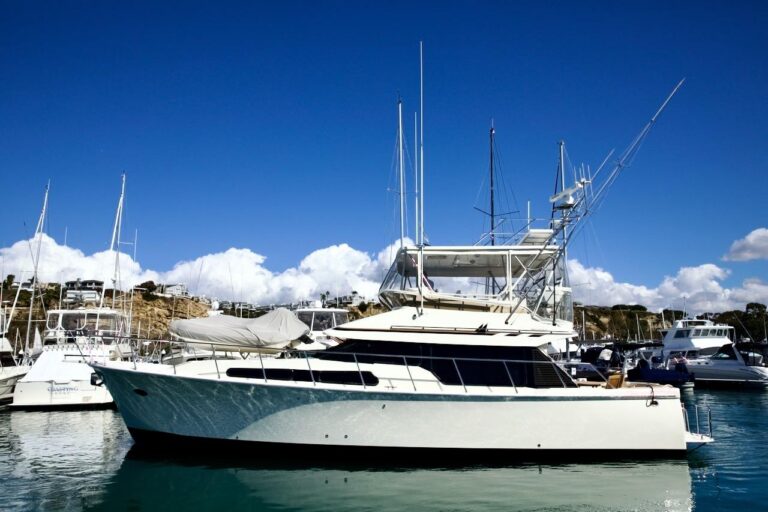
Visually, a flybridge is taller and more vertical; a sport yacht sits lower in the water and reads as more horizontal. This architectural difference cascades into handling, fuel consumption, pricing, and the onboard experience. A 2015 Riviera 565 SUV, for example, bridges both worlds with an SUV (Sport Utility Vessel) design that combines flybridge-style upper deck access with sportier proportions—a growing hybrid category.
Which Layout Offers Better Visibility and Command?
Flybridges win decisively on visibility. The elevated helm position—typically 8–12 feet above waterline—provides commanding views of approaching boats, shallow water, and navigation hazards. This height advantage is especially valuable in congested anchorages, narrow channels, and coastal cruising where situational awareness prevents collisions and groundings.
The flybridge helm also allows the captain to monitor the entire vessel: crew on the foredeck, swimmers at the stern, and guests on the main deck. Many cruising families find this oversight invaluable, particularly in crowded marinas or when docking single-handed. A 2006 Viking Princess 61 Flybridge exemplifies this advantage—the elevated station lets the operator see over the cabin house to the bow, critical for precise maneuvering.
Sport yachts offer adequate visibility from their single helm, often with wraparound windows and modern camera systems compensating for lower eye height. However, they cannot match the panoramic vantage point of a flybridge. If visibility is your priority, a flybridge yacht is the clear choice.
How Do Fuel Consumption and Operating Costs Compare?
Fuel economy favors sport yachts. The lower profile and reduced windage of a sport yacht design means less wind resistance and hydrodynamic drag. At cruise speeds (10–15 knots), a 50-foot sport yacht typically burns 15–25 gallons per hour, while a comparable 50-foot flybridge consumes 20–30 gph—a meaningful difference over long-distance cruising.
The flybridge's additional weight and taller center of gravity also increase fuel burn at displacement and semi-planing speeds. Over a 500-nautical-mile cruise, this can mean an extra 100–150 gallons consumed, translating to $400–$600 in fuel at current prices.
Maintenance costs are broadly similar between the two types, though flybridges require additional upkeep: canvas covers, upper-deck hardware, and the second helm station. Insurance premiums are comparable, though some insurers charge slightly more for flybridges due to the added complexity of dual helms and upper-deck systems.
Dockage and mooring fees are where sport yachts shine. Their lower profile and reduced beam (width) often qualify them for smaller slips, saving $100–$300 monthly in high-cost markets like South Florida or Southern California. A 2018 Galeon 500 Fly, positioned as a modern flybridge, still commands higher slip fees than a sportier 50-footer due to its footprint.
What Are the Entertaining and Lifestyle Differences?
Flybridges dominate for entertaining. The upper deck is a dedicated social zone—guests can gather, enjoy cocktails, and socialize without interfering with the helm operation or main salon. This separation of captain's duties from social space is a major appeal for families and groups. The flybridge becomes a second living room, perfect for sunset viewing, al fresco dining, or simply lounging while anchored.
Sport yachts consolidate entertaining into the main salon and lower deck. While the helm area may have adjacent seating, there is no separate upper-deck retreat. Entertaining happens in the same space as navigation, which can feel cramped when both are active simultaneously.
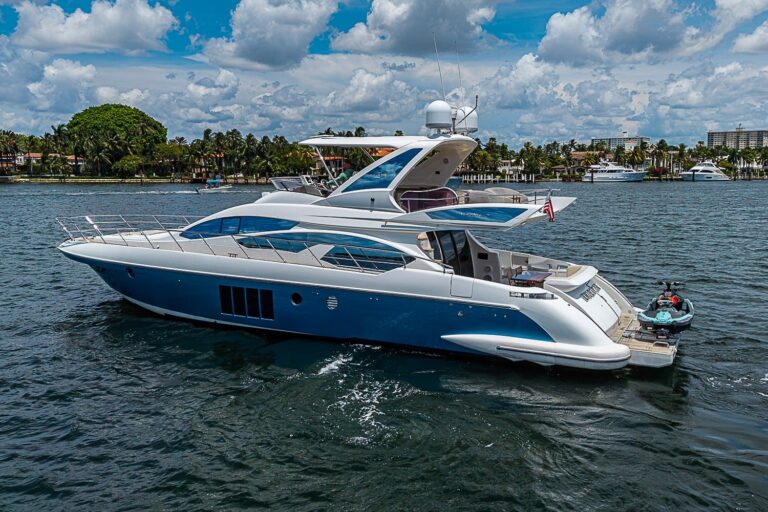
For liveaboards and long-term cruisers, the flybridge's extra outdoor space is psychologically valuable—it breaks monotony and provides relief from cabin fever. However, sport yachts offer more interior volume per overall length, meaning larger cabins, heads, and galleries below deck. A 2013 Azimut 64 is a modern flybridge that balances both: excellent entertaining space topside with generous interior accommodations.
Which Design Handles Better in Rough Water?
Sport yachts have a stability advantage in rough conditions. Their lower center of gravity and reduced topsides mean less wind leverage and easier motion in a seaway. Flybridges, with their elevated superstructure, experience more pitching and rolling—the upper deck amplifies motion, which some passengers find uncomfortable in heavy weather.
For coastal cruising in moderate conditions (2–4-foot seas), both designs perform well. But if you regularly venture into open ocean or expect frequent rough-water passages, a sport yacht's lower profile translates to a more comfortable ride. The 2002 Mikelson 50 Sportfisher exemplifies the sportfisher category, which prioritizes a deep V-hull and low freeboard for sea-keeping—traits that benefit sport yachts generally.
Flybridges are better suited to protected waters, inland cruising, and fair-weather passages. Their motion in rough seas is not dangerous, but it is more pronounced and can deter motion-sensitive passengers.
What Size Range Makes Sense for Each Type?
Flybridges dominate the 45–75-foot range, where the extra deck space justifies the added cost and complexity. Below 45 feet, the flybridge becomes cramped and less valuable. Above 75 feet, both types offer comparable space, and the distinction blurs—many large motor yachts feature flybridges as standard.
Sport yachts are most popular in the 35–60-foot bracket. This is where their efficiency and contemporary styling shine. Below 35 feet, the distinction between the two types becomes less pronounced. Above 60 feet, the sport yacht category fragments: some builders continue the sporty aesthetic, while others migrate toward conventional or expedition designs.
For a first-time buyer in the $400,000–$1 million range, a 45–55-foot flybridge or sport yacht offers the best value. A 2027 Beneteau Antares 11 Fly represents the modern flybridge at 36 feet—compact but purposeful, ideal for couples and small families. Larger budgets unlock true cruising flybridges in the 55–65-foot range, like the 2000 Destiny Flybridge Motor Yacht, which offers the full flybridge experience.
How Do Resale Values Compare?
Resale values depend more on brand reputation, condition, and market demand than on flybridge versus sport yacht designation. However, some trends emerge:
- Flybridges hold value well in the 45–65-foot range, where demand is consistent among cruising families. Older flybridges (10+ years) depreciate more steeply because newer models offer updated systems and styling.
- Sport yachts in the 40–55-foot range have strong resale appeal, particularly modern designs from premium builders. Their fuel efficiency and contemporary aesthetics attract active cruisers.
- Hybrid designs (like SUVs) are newer to the market, so long-term resale data is limited. Early indications suggest they hold value well due to their versatility.
- Builder reputation matters enormously. A Azimut, Viking, or Riviera flybridge will resale faster and at higher percentages than an obscure brand, regardless of design type.
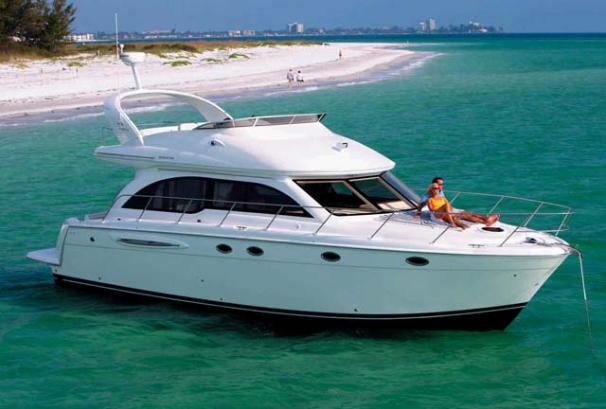
A well-maintained 2007 Meridian 411 Sedan—a sedan-style (compact flybridge) design—demonstrates solid depreciation curves for its class, having held reasonable value over 15+ years.
What Should I Look For in a Survey?
When surveying a flybridge yacht, prioritize these areas:
- Upper-deck structural integrity: Check for stress cracks around the flybridge supports, water intrusion at the roof seams, and corrosion in the stainless-steel railings and hardware. The flybridge is exposed to constant UV and salt spray.
- Dual helm systems: Verify that both helm stations function correctly—steering, throttle, trim tabs, and electrical systems must operate smoothly from both positions. Ensure the upper helm has adequate backup systems (manual steering, backup battery power for electronics).
- Canvas and weatherproofing: Inspect the flybridge bimini top, side curtains, and canvas for tears, mildew, and water leaks. Replacement canvas is expensive ($5,000–$15,000).
- Center of gravity: Ask the surveyor to assess whether the vessel feels stable and balanced. Flybridges can be top-heavy if poorly designed or if equipment has been added above the waterline.
- Stairway and access: Check that the flybridge stairs are secure, non-slip, and properly lit. Safety is critical for an elevated deck.
For sport yachts, focus on:
- Single helm integration: Ensure the main helm is ergonomic, with good sight lines and intuitive control layouts. Sport yacht helms are often more compact, so poor layout is harder to retrofit.
- Hull integrity and bottom: Sport yachts are often pushed harder, so inspect the hull for stress cracks, particularly around the keel and chine (where the hull flattens). Check for any signs of grounding or collision repair.
- Engine and propulsion: Sport yachts may have higher-horsepower engines. Verify service records and fuel consumption data. High-performance engines require diligent maintenance.
- Windscreen and visibility: Inspect the windscreen for cracks or fogging (a sign of seal failure). Check all windows for proper operation and sealing.
Both types should receive standard surveys covering hull, systems, engines, and structural integrity. The flybridge variant simply demands additional attention to upper-deck systems and weatherproofing.
What Does It Cost to Own a Flybridge or Sport Yacht?
Purchase prices vary widely by builder, age, and size, but broad ranges help frame the decision:
- Used flybridge yachts (45–55 feet): $400,000–$1.2 million, depending on age and condition. A 2006 Viking Princess 61 Flybridge lists at $667,800—a fair mid-range example.
- Used sport yachts (45–55 feet): $350,000–$1 million, often slightly less than comparable flybridges due to lower operating costs and newer designs.
- New flybridges: $800,000–$3 million for production models (45–60 feet). A 2027 Beneteau Antares 11 Fly, though smaller at 36 feet, represents entry-level new flybridge pricing.
- New sport yachts: $600,000–$2.5 million for comparable sizes, often underpricing flybridges.
Annual operating costs (45–55 foot vessel, 200 hours/year):
About this guide
General buying information from Fly Yachts, a yacht brokerage in Fort Lauderdale. Prices, costs and specifications are typical ranges, not quotes. Check any boat you are serious about with a survey and your own advisers.
All buying guides