Compass Articles
Used Boat Systems Checklist: What to Inspect Before You Buy
A used boat inspection checklist by system: engines, through-hulls, bilge pumps, wiring, fuel, steering, extinguishers, sea trial and Florida title rules.
A used boat inspection should cover every system that can sink the boat, burn it or strand you. That means the engines, everything below the waterline, fuel, electrical, steering, safety gear and the paperwork. A condition and valuation survey, an engine survey and a sea trial under load cover most of it. We go system by system below, with what to ask the surveyor and what you can check yourself.
The Bottom Line
- Order a condition and valuation (C&V) survey. Discover Boating calls it the most common survey for a used boat purchase.
- Get a separate engine survey with compression tests and oil analysis. Don’t rely on the hour meter.
- Sinking and fire are both on BoatUS’s list of top insurance claims. Start with through-hulls, bilge pumps and wiring.
- Check the dates on disposable fire extinguishers. The Coast Guard says they expire 12 years after manufacture.
- In Florida, you have 30 days after the purchase to title and register the boat.
How to use this checklist
Use this list to plan the survey with your surveyor. Marine surveyors aren’t licensed, according to BoatUS, so check credentials. The NAMS-CMS and SAMS AMS designations each require five years of experience and an exam. Our guide on how to survey a yacht before buying covers survey types, costs and how to choose a surveyor.
Discover Boating gives a rule of thumb of about $20 to $25 per foot for a survey, with minimum fees. An insurance-only C&V is less thorough than one ordered for a purchase. On larger boats, buyers sometimes add a separate engine survey.
Nearly all surveyors measure a boat against ABYC standards, BoatUS says. ABYC is the American Boat and Yacht Council. The table shows the ABYC standard behind each system on this list.
| System | Main ABYC standard | Who checks it |
|---|---|---|
| AC and DC electrical | E-11 | Hull surveyor |
| Battery chargers and inverters | A-31 | Hull surveyor |
| Gasoline fuel systems | H-24 | Hull surveyor |
| Diesel fuel systems | H-33 | Hull surveyor |
| Electric bilge pumps | H-22 | Hull surveyor |
| Seacocks and through-hulls | H-27 | Hull surveyor, on the haul-out |
| Galvanic isolators | A-28 | Hull surveyor |
| Navigation lights | A-16 | Hull surveyor |
| Fire fighting equipment | A-4 | Hull surveyor |
| Engines and drives | None listed here | Engine surveyor or dealer |
Engines and drives
Give the engines their own survey. Power & Motoryacht recommends a compression test and spectrographic oil analysis. An oil sample taken right after an oil change can hide a problem, so ask when the oil was last changed.
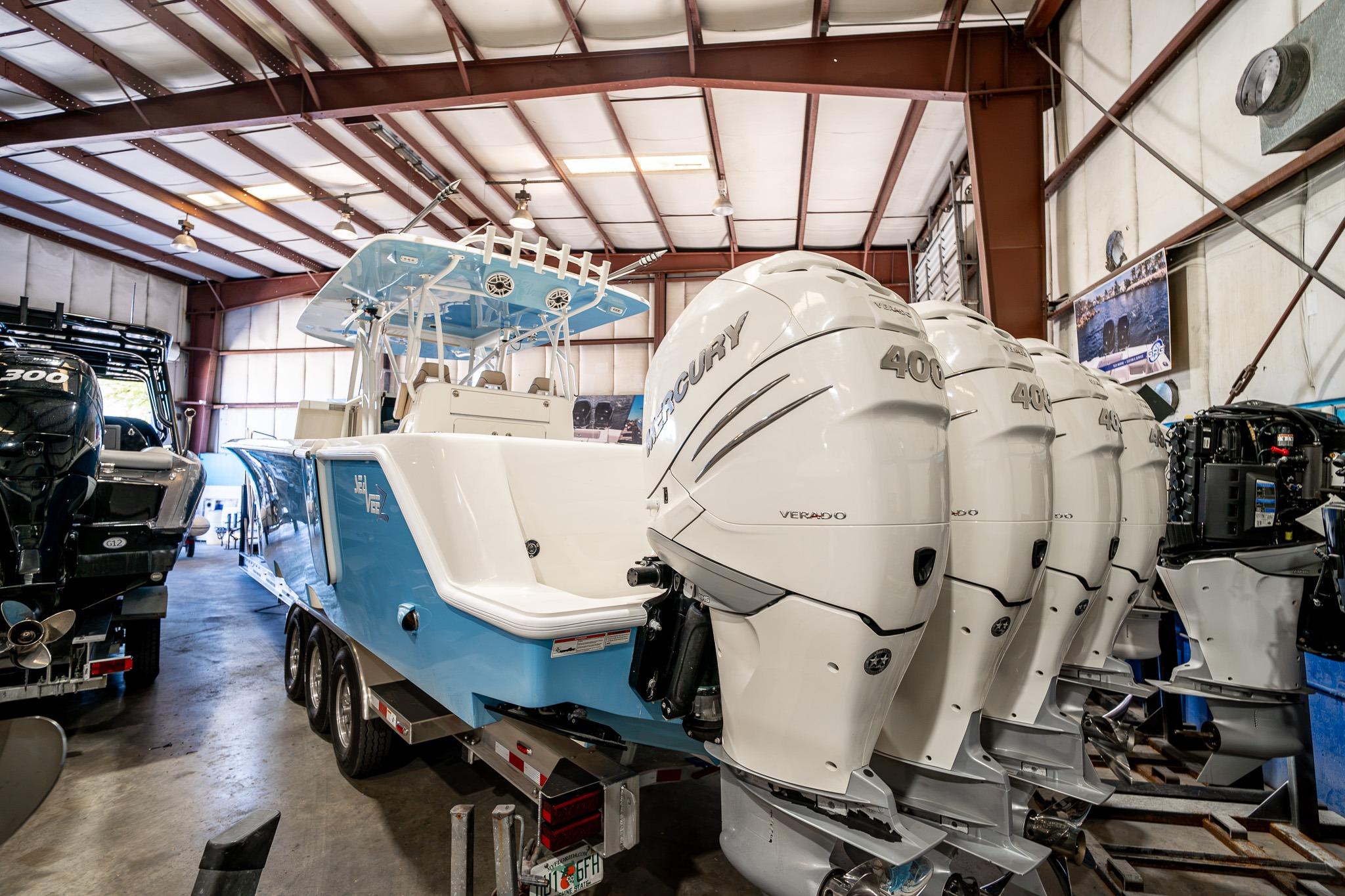
Don’t trust the hour meter. Boating magazine advises having a mechanic connect a scan tool to modern engines. The scan shows hours and any stored fault codes from the engine’s own computer. On outboards and sterndrives, ask for the dealer’s printout for each engine.
The sea trial has to run the engines under sustained load. Idling at the dock doesn’t count, says Power & Motoryacht. The engine surveyor may also use an infrared thermometer on the exhaust. Ask about any cylinder that reads well off the others.
On a sterndrive, push the drive up and down. Boating magazine says a transom that flexes or feels mushy suggests rot. Also check the raw-water intake and impeller service records. BoatUS found that 9% of fire claims started with other engine problems, often overheating from a blocked intake or a failed impeller.
Below the waterline: through-hulls, seacocks and bilge pumps
Water usually gets in through holes below the waterline, according to BoatUS claims data. Sinking ranked fifth among the BoatUS marine insurance claims it reviewed for 2012 to 2017. More than two-thirds of sinkings happen at the dock or on a mooring, Boating reported, citing BoatUS.
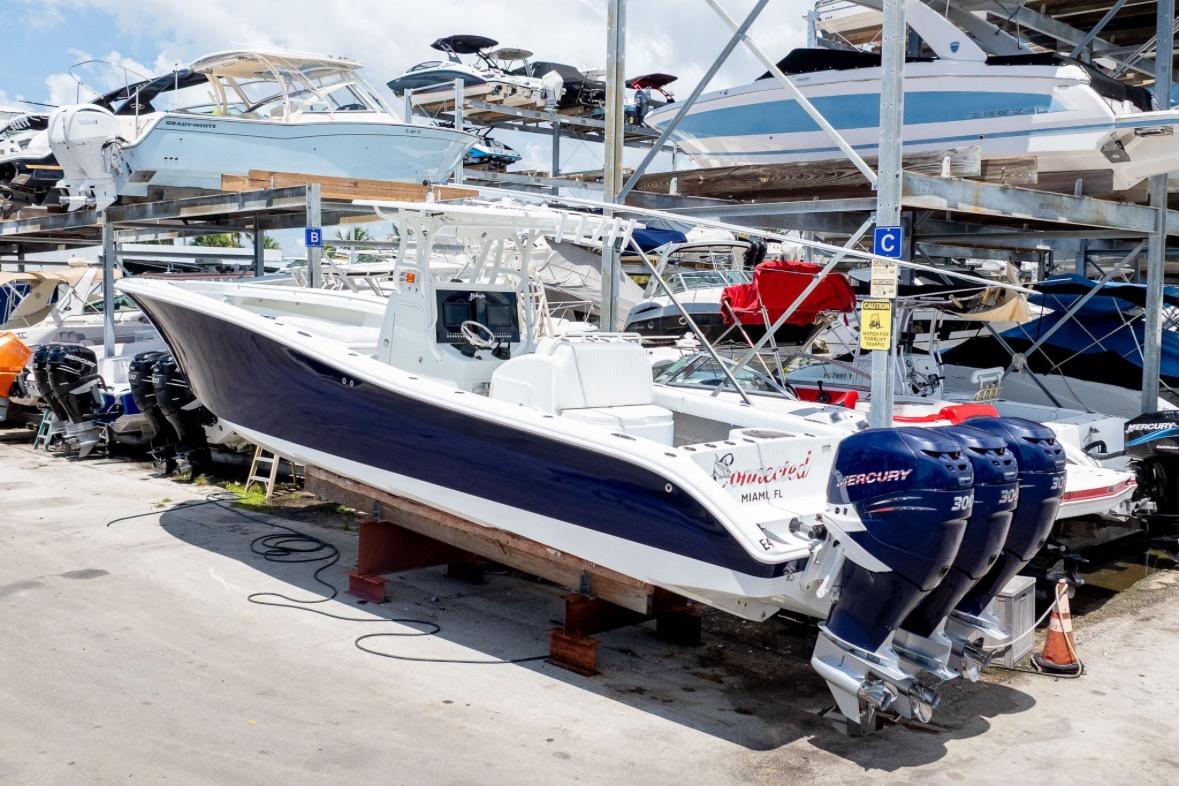
The haul-out is the only time the surveyor sees the whole bottom. Make sure the survey covers each of these:
- Seacocks. Every seacock should open and close by hand. A seized valve can’t stop a leak.
- Hoses and clamps. Look for cracked hose, rusted clamps and single clamps where two belong.
- Sterndrive bellows. BoatUS found sterndrives behind more than a quarter of sinkings caused by part failures. About 80% of those were bellows.
- Shaft seals. A traditional stuffing box should drip about 2 to 3 drops per minute underway and none at rest.
- Bilge hose. Bilge pump discharge hose should be smooth-walled inside.
Then test the bilge pumps. Lift each float switch and confirm the pump runs and water leaves the boat. Ask the owner how often the pump cycles at the dock. Power & Motoryacht says a pump running three or four times an hour needs investigating. Look for anti-siphon loops on head, bilge and exhaust lines too.
Electrical systems: batteries, chargers and shore power
BoatUS says “faulty wiring causes most fires.” Fire and explosion ranked eighth in its 2012 to 2017 claims review. An older BoatUS breakdown of fire claims shows where they start:
| Fire source | Share of BoatUS fire claims |
|---|---|
| Off-boat sources, such as a fire spreading from another boat | 26% |
| Engine electrical, often wiring harnesses on boats over 25 years old | 20% |
| Other DC electrical | 15% |
| AC electrical, mostly between the shore power pedestal and the boat’s inlet | 12% |
| Other engine problems, often overheating | 9% |
Have the surveyor open the electrical panels and look behind them. Melted insulation, household wire, loose connections and added circuits with no fuse are all bad signs. Check the shore power inlet and plug for scorch marks, since that link causes most AC fires.
Ask for a leakage check on the shore power system. Boating magazine describes a clamp meter test on the shore power cord, where any reading other than zero means current is leaking. Leakage matters most in fresh water, where electric shock drowning is the main risk. ABYC’s ELCI, a boat-side protection device, trips at 30 milliamps. An isolation transformer is the other option. If the boat has a galvanic isolator, it should be a fail-safe type.
Check the batteries, chargers and inverter too. Look at battery dates, hold-downs and terminal covers. Confirm the charger and inverter turn on and show no fault lights.
Fuel system
Fuel leaks are a fire risk, especially on gasoline boats. Smell the bilge and engine room before anyone runs a blower or starts an engine. Then look at the tank, hoses, fittings and filters for leaks, corrosion and wet spots.
On gasoline boats, the federal rule at 33 CFR 183.558 sets which hose goes where. The hose from the tank to the engine must be USCG Type A1, or B1 if it passes a drain test. Fill and vent lines may be A1 or A2. Ask the surveyor to read the hose markings and note any line that doesn’t match. Diesel boats follow ABYC H-33, and the surveyor will check them against it.
Ask the owner when the fuel filters were last changed. On a boat that sits, ask how old the fuel is. Water in the separator bowl is worth a question.
Steering and hydraulics
Check the steering at the dock and again on the sea trial. Turn the wheel lock to lock with the engines off, then with them running. It should move smoothly with no binding, slop or noise.
On hydraulic steering, look for fluid at the helm pump, hoses and cylinder. Ask when the system was last bled or serviced. On cable steering, check for stiffness and corrosion at the engine end. On boats with hydraulic trim tabs, a swim platform lift or a hydraulic bow thruster, run each one and look for leaks.
Generator and air conditioning
Ask the owner for hours and service records on the generator. Run it under load by turning on the air conditioning and other AC loads. Watch for smoke, odd noise or a drop in voltage.
Run every air conditioning zone, including heat if the units are reverse-cycle. Check that cooling water flows from each raw-water discharge. Weak flow can mean a clogged strainer or a worn pump. Look in the bilge under each unit for leaks and corrosion.
Navigation electronics, VHF and lights
Turn on every piece of electronics and confirm it works. Check the chartplotter, radar, sonar, autopilot, VHF radio and engine displays. Ask for the software versions and whether chart cards are current.
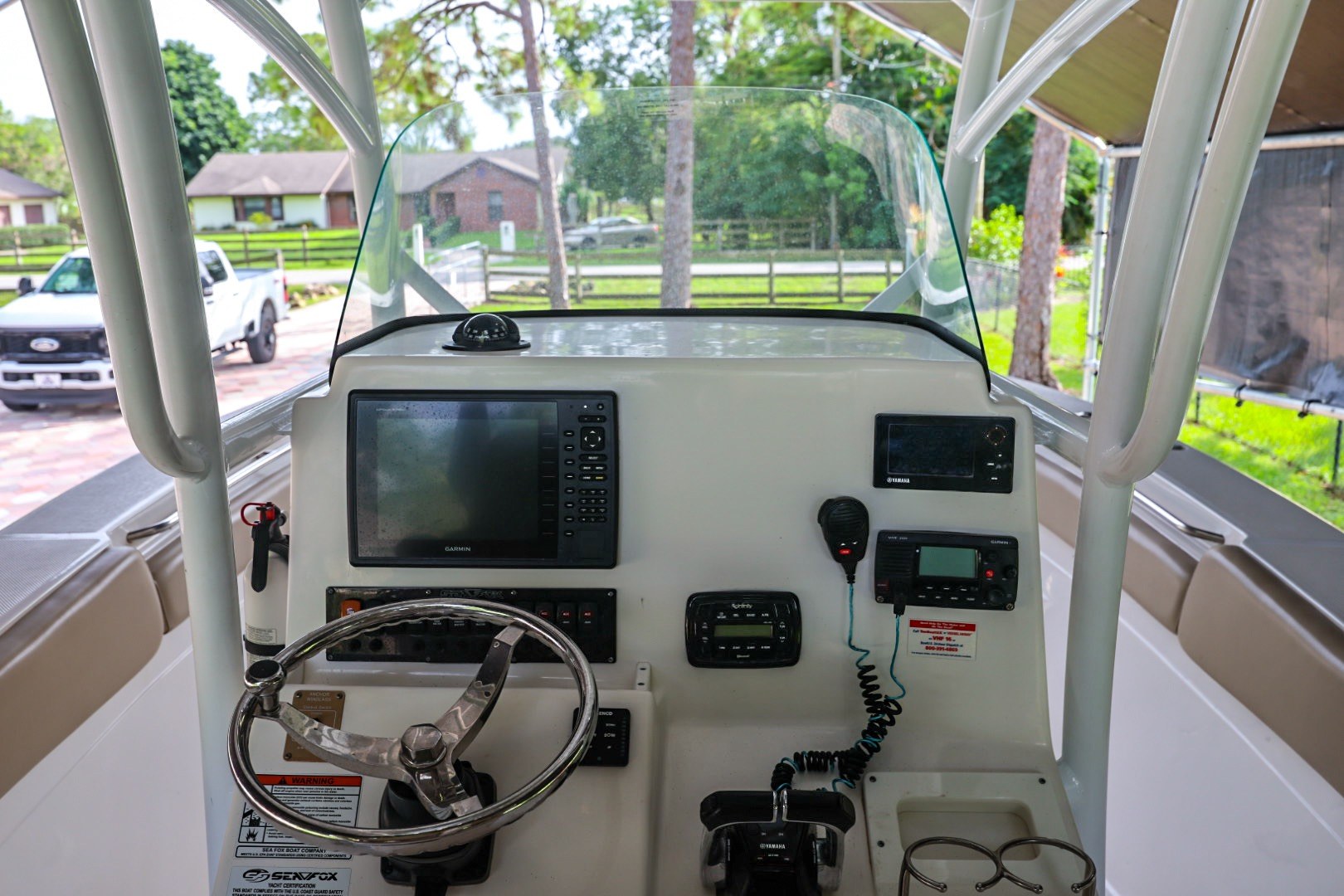
Test the VHF with a radio check on a working channel. Confirm the GPS position shows on the radio. If the radio has DSC, ask whether an MMSI number is registered and in whose name.
Test the navigation lights at the dock. Under 33 CFR 83.23, a power-driven vessel underway shows a masthead light, sidelights and a sternlight. A power-driven vessel under 12 meters, about 39.4 feet, may instead show an all-round white light and sidelights. ABYC A-16 covers how navigation lights should be installed. Check the anchor light and deck lights too.
Fire extinguishers and safety gear
Check the date on every disposable fire extinguisher. Under a Coast Guard rule effective April 20, 2022, a disposable extinguisher expires 12 years after the manufacture year stamped on the bottle. Replacements must be UL rated 5-B or 20-B and marked “Marine Type USCG.” Undated B-I and B-II extinguishers are still acceptable on model-year 2017 and older boats if they are in good working order.
Extinguishers must also be readily accessible. On boats with a fixed engine room system, ask for the last inspection date and test the shutdown and indicator. Check life jackets, flares, the horn and any EPIRB for condition and expiration dates.
Sanitation and holding tanks
Find out which marine sanitation device (MSD) the boat has, and check that it works. The EPA defines three types:
- Type I treats waste for discharge, on boats 65 feet and shorter. The discharge may contain up to 1,000 fecal coliform per 100 milliliters.
- Type II also treats waste for discharge, to a stricter limit of 200 fecal coliform per 100 milliliters.
- Type III is a holding tank. It doesn’t discharge treated waste.
No sewage may be discharged in a no-discharge zone, treated or not. Florida had four no-discharge zones as of January 2025, according to Florida Sea Grant. If you’ll keep the boat in one, you need a working holding tank and a pump-out fitting.
Flush every head and listen for the pump. Smell the hoses near the tank, since permeated hose holds odor. Ask when the hoses were last replaced and check the tank level gauge.
Anchor and windlass
Run the windlass both ways with the engines running. The motor should pull steadily and the gypsy should grip the rode. Pull out enough chain and line to check for rust, worn splices and a secure bitter end. Look at the anchor, the shackle and the seizing wire on the shackle pin.
The sea trial
Plan the sea trial with the surveyor so they can watch gauges and the engine room underway. Run the boat to cruise speed and to wide open throttle, and compare rpm and speed with the listing and the manufacturer’s numbers.
Watch for overheating, alarms, smoke and vibration. Try hard turns at speed, test the trim tabs and back down. When you return, open the engine room again and look for fresh leaks. If something fails, the survey report gives you a basis to renegotiate or walk away.
Paperwork: Florida title and registration
Confirm the seller’s title or documentation matches the hull identification number on the transom. Check for liens. Ask for service records, engine survey reports from the last sale and any warranty paperwork.
In Florida, you have 30 days from the purchase date to title and register the boat, according to the FLHSMV. Keep proof of the purchase date aboard during that time. Operating an unregistered boat after that is a second-degree misdemeanor. A federally documented vessel is exempt from Florida titling.
Buying a used boat with Fly Yachts
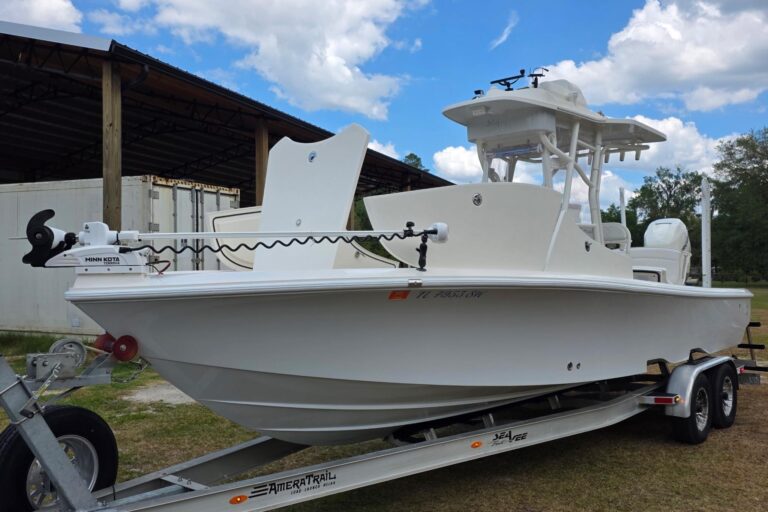
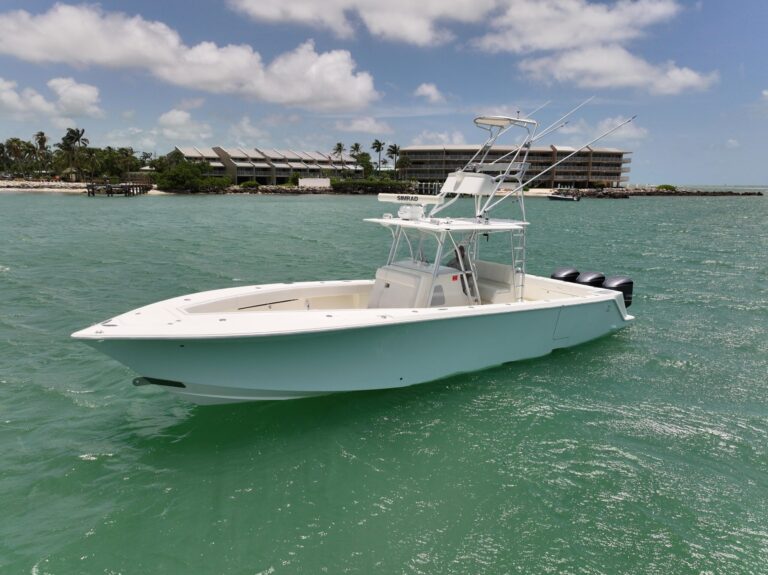
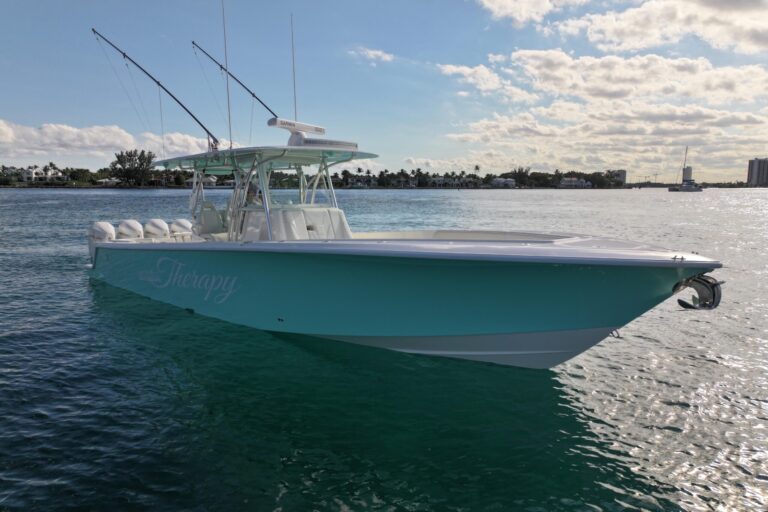
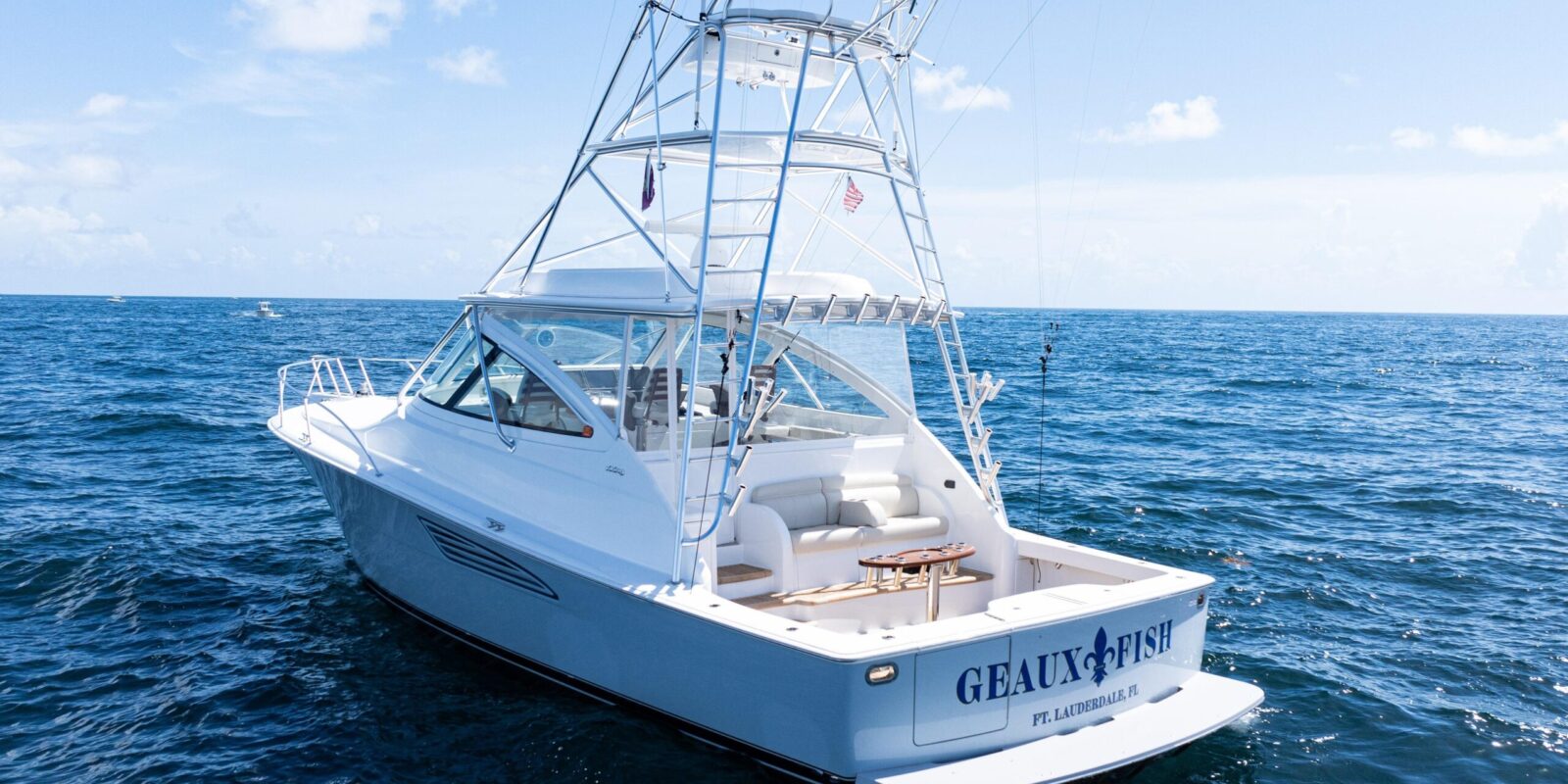
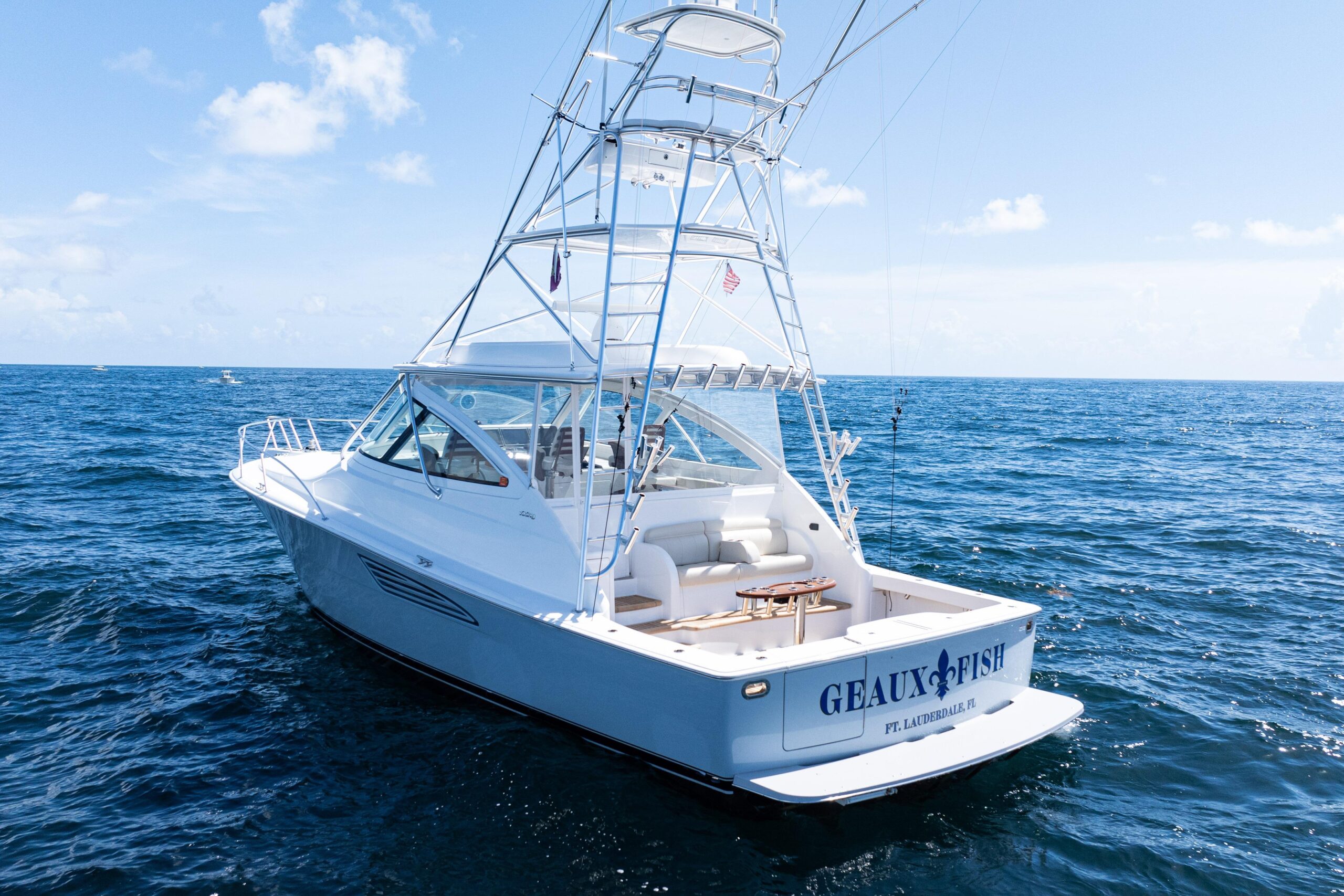
We’re a Fort Lauderdale yacht brokerage, and we work with buyers through surveys, sea trials and closing. The boats shown here are from our listings. They are the 2019 Viking 44 Open, 2020 SeaVee 390Z, 2007 Yellowfin 36 Offshore and 2015 Sea Fox 286 Commander. Listing details come from sellers, so read our listing disclaimer.
For a model-specific checklist, see our used SeaVee 390Z buyer’s guide. To budget for ownership, read how much yacht maintenance costs. Track pricing on Market Watch. To talk about a boat, speak with a broker. If you’re selling, start at Sell Your Yacht.
Frequently asked questions
What should I inspect on a used boat before buying?
Inspect the engines and drives, through-hulls, seacocks, bilge pumps, wiring, shore power and fuel system. Then check the steering, generator, air conditioning, electronics, lights, fire extinguishers, heads and windlass. Finish with a sea trial under load and a title check.
How much does a boat survey cost?
Discover Boating gives a rule of thumb of about $20 to $25 per foot, with minimum fees. A separate engine survey costs extra. Prices vary by surveyor, location and boat size.
Is a marine survey worth it on a used boat?
Yes. A survey is often the only way to find hidden problems below the waterline, in the wiring or in the engines. The report also gives you a basis to renegotiate or walk away.
How do I check engine hours on a used boat?
Have a mechanic connect a scan tool to each engine. Modern engines store hours and fault codes in their own computer. Boating magazine advises against trusting the hour meter at the helm.
When do boat fire extinguishers expire?
Disposable fire extinguishers expire 12 years after the manufacture year stamped on the bottle, under a Coast Guard rule effective April 20, 2022. Replacements must be UL rated 5-B or 20-B and marked “Marine Type USCG.”
Sources
- Discover Boating (NMMA), “Marine Surveys and Surveyors,” checked Nov. 19, 2026.
- Virginia DWR, reprinting BoatUS, “Hiring a Competent Marine Surveyor Helps When Buying a Used Boat,” Feb. 23, 2022.
- Power & Motoryacht, “How to Evaluate an Engine,” Apr. 2, 2014.
- Boating, “Used-Boat Buying Secrets,” updated Aug. 19, 2021.
- U.S. Coast Guard, ACN 002/22 on fire extinguisher expiration, Jan. 14, 2022.
- 33 CFR 83.23, Power-driven vessels underway.
- 33 CFR 183.558, Hoses and connections.
- U.S. EPA, “Marine Sanitation Devices (MSDs),” updated June 9, 2026.
- Florida Sea Grant, “Florida Designates First Aquatic Preserve as a No-Discharge Zone,” Jan. 15, 2025.
- Boating, “Electric Shock Drowning Prevention,” Apr. 15, 2013.
- ABYC, Standards list, checked Nov. 19, 2026.
- BoatUS, “Top 10 Marine Insurance Claims,” August/September 2018.
- Boating, “10 Ways to Prevent Your Boat From Sinking Dockside,” updated Apr. 18, 2017.
- Power & Motoryacht, bilge pump and anti-siphon guidance, May 19, 2021.
- Western Outdoor Times, “BoatUS Fire Facts,” Apr. 1, 2016.
- Florida HSMV, Vessel Titling and Registrations, checked Nov. 19, 2026.
- Fly Yachts listings for the four boats shown, checked Nov. 19, 2026.