Buying guide
What Is a Buyers Broker
A buyer's broker is a licensed marine professional who represents your interests exclusively during a yacht purchase, securing better prices, identifying hidden defects, and navigating complex transactions on your behalf. Unlike seller's agents who work for the boat's owner, buyer's brokers conduct independent surveys, negotiate terms, verify ownership and title, and ensure you understand all costs before closing. They typically earn commission only when a deal closes—aligning their incentive with yours—and provide market expertise that protects first-time and experienced buyers alike from costly mistakes. Using a buyer's broker transforms yacht purchasing from a high-stakes gamble into a structured, transparent process backed by professional advocacy.
How Does a Buyer's Broker Differ from a Seller's Agent?
The fundamental distinction between a buyer's broker and a seller's agent centers on loyalty and financial incentive. A seller's agent works for the boat's owner and is compensated when the sale happens at the highest possible price—their goal is to maximize the seller's return, not protect your wallet. A buyer's broker, by contrast, works exclusively for you and is motivated to find the best value, negotiate the lowest price, and uncover any issues that might justify a lower offer or walk-away decision.
In practice, this means a buyer's broker will:
- Conduct independent due diligence before you commit funds, including haul-outs, engine inspections, and sea trials
- Negotiate on your behalf without revealing your maximum budget or timeline
- Review all contracts to ensure terms favor you, not the seller
- Identify off-market opportunities and comparable sales data that give you leverage
- Protect your earnest money and deposits in escrow accounts until closing
A seller's agent, meanwhile, may downplay mechanical issues, pressure you to decide quickly, or steer you toward higher-priced inventory that yields larger commissions. The buyer's broker model eliminates this conflict of interest entirely.
What Does a Buyer's Broker Actually Do?
A buyer's broker's responsibilities begin long before you sign papers and extend through closing and beyond. The scope of work varies by engagement, but typically includes:
Market Research & Sourcing Your broker analyzes recent sales, current listings, and off-market inventory to identify vessels that match your specifications and budget. They track pricing trends across builders, sizes, and conditions—knowledge that prevents you from overpaying. For example, when evaluating a 2022 Nor-Tech 50 Sport listed at $1,150,000, a buyer's broker compares it against similar 50-foot performance boats sold in the past 12 months to confirm whether that price is market-competitive.
Pre-Purchase Inspection & Survey Before you commit earnest money, your broker arranges a comprehensive survey by a certified marine surveyor. This includes haul-out inspection of the hull, keel, and propulsion; engine compression tests; electrical and plumbing systems; interior condition; and sea trials under load. The surveyor's detailed report becomes your negotiating tool—if defects are found, you have grounds to request price reductions or repairs.
Financing & Documentation Your broker connects you with marine lenders, reviews loan terms, and ensures all title work is clean. They verify the vessel's registration, lien status, and any outstanding mortgages. For used boats especially, this step prevents purchasing a vessel with hidden claims or stolen documentation.
Negotiation Armed with survey findings, comparable sales data, and market knowledge, your broker negotiates on your behalf. They request price reductions for defects, negotiate repair credits, or walk away if the asking price doesn't align with the boat's true condition. This advocacy saves buyers thousands—sometimes tens of thousands—on individual transactions.
Contract Review Your broker ensures the purchase agreement protects you: contingencies for survey approval, sea trial results, financing approval, and title clearance. They flag unfavorable terms and explain what each clause means in plain language.
Closing Coordination Your broker coordinates with the seller's agent, title company, and lender to ensure all paperwork is complete, funds are transferred securely, and you receive clear title and all keys, manuals, and warranties on closing day.
What Should I Look for in a Buyer's Broker?
Not all brokers operate under a buyer's-broker model. Some are dual agents (representing both buyer and seller simultaneously—a significant conflict of interest), while others are seller's agents exclusively. When selecting a buyer's broker, verify:
Exclusive Buyer Representation Confirm in writing that the broker represents you exclusively and will not represent the seller or other buyers in the same transaction. This is typically documented in a buyer's broker agreement that outlines their duties, your obligations, and how commission is structured.
Marine Industry Credentials Look for brokers with certifications from the National Association of Yacht Brokers (NAYB), Yacht Brokers Association of America (YBAA), or similar bodies. These organizations enforce ethics codes and require continuing education. Experience matters too—brokers who have worked in marine surveying, mechanical trades, or boat building bring deeper technical knowledge.
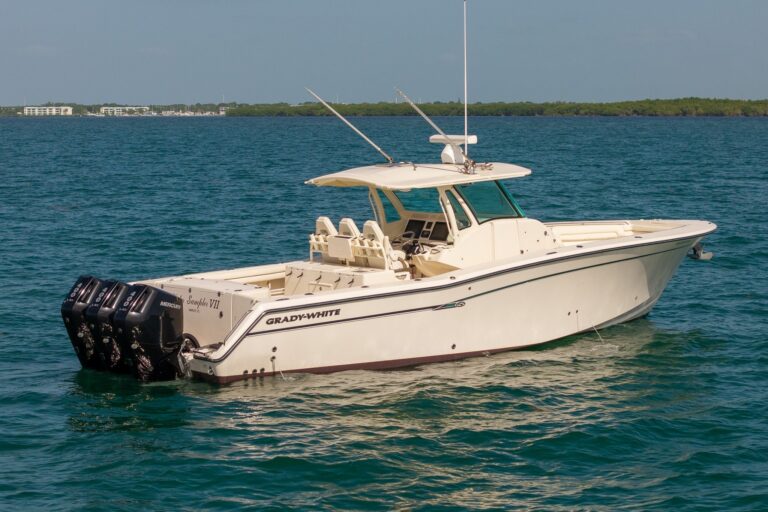
Local Market Knowledge A buyer's broker who specializes in your target region understands local pricing, available inventory, and seasonal trends. They know which builders perform well in your climate, which marinas have the best service, and which used boats hold value. This is especially valuable when purchasing a 2015 Grady-White Canyon 376 in Pompano Beach—a broker familiar with South Florida's offshore fishing market can assess whether that model suits local conditions and resale demand.
Transparency About Costs Your broker should clearly explain how they're compensated. Buyer's brokers typically earn 5–10% commission split with the seller's agent, paid from the sale price at closing. Some brokers charge flat fees or hourly rates instead. Confirm there are no hidden costs and that you won't be charged for survey, title work, or lender coordination—those are standard broker services.
References & Track Record Ask for client references and verify their experience with boats similar to what you're buying. Check online reviews and the Better Business Bureau. A reputable broker will have closed dozens of transactions and can speak candidly about their successes and how they've resolved problems.
How Does the Buyer's Broker Commission Work?
Understanding commission structure is critical because it affects your costs and your broker's incentives. In the traditional yacht market, commission is typically split between the buyer's broker and the seller's agent, and it comes from the sale price. Here's how it works:
Standard Split Commission Most yacht sales involve a 10% total commission split evenly (5% buyer's broker, 5% seller's agent). On a $500,000 purchase, that's $50,000 total: $25,000 to each broker. This commission is paid at closing from the seller's proceeds, so it doesn't come directly from your pocket—but it does reduce the net amount the seller receives, which can affect their willingness to negotiate.
Flat-Fee Alternative Some buyer's brokers charge a flat fee ($5,000–$25,000 depending on boat size and transaction complexity) instead of commission. This can be advantageous if you're buying a high-value vessel (where 5% commission would be substantial) or if the seller's agent won't agree to a standard split.
Hourly Rates A few brokers charge hourly rates ($150–$300/hour) for specific services like survey coordination or contract review. This works well if you need limited broker assistance rather than full representation.
No-Cost Representation In some cases, the seller's agent agrees to pay the buyer's broker's commission from their own split. This means you get full buyer's broker representation at no cost to you. Always ask whether this is possible in your transaction.
The key is to clarify commission terms upfront in your buyer's broker agreement. A well-structured agreement aligns your broker's incentive with yours: they earn more when you buy the right boat at the right price, not when you buy the most expensive boat available.
What Are the Advantages of Using a Buyer's Broker?
The financial and logistical benefits of buyer's broker representation are substantial:
Price Savings Independent negotiation on your behalf typically saves 3–8% of the purchase price through better offers, repair credits, or walking away from overpriced inventory. On a $400,000 boat, that's $12,000–$32,000 in your pocket. A buyer's broker's knowledge of comparable sales prevents you from anchoring to the asking price—instead, they anchor to what similar boats actually sold for.
Defect Detection Professional surveys catch mechanical, structural, and cosmetic issues that untrained buyers miss. A surveyor might discover engine hour discrepancies, soft spots in the cabin sole, corroded through-hulls, or deferred maintenance that could cost $20,000–$100,000+ to remedy. Armed with this information, you either negotiate a price reduction or walk away before committing funds.
Time Savings Coordinating surveys, arranging sea trials, reviewing contracts, and managing closing logistics is time-consuming. Your broker handles all of this, freeing you to focus on your decision-making rather than administrative tasks.
Risk Mitigation Your broker ensures title is clear, financing is in place, and all contingencies are met before closing. They protect your earnest money in escrow and ensure you're not inheriting undisclosed liens, unpaid taxes, or stolen documentation.
Expert Negotiation Negotiating a yacht purchase is fundamentally different from buying a house. Your broker understands marine-specific issues—engine hours, survey recommendations, seasonal market dynamics—and uses this expertise to negotiate effectively. They also insulate you emotionally; brokers can walk away from deals or make aggressive offers without the personal friction that occurs when buyers and sellers negotiate directly.
Access to Off-Market Inventory Brokers have relationships with other brokers and private sellers that give them access to boats before they're publicly listed. This early access can help you find the right vessel before competitors do.
How Should I Prepare to Work With a Buyer's Broker?
Before engaging a buyer's broker, clarify your needs and financial situation:
Define Your Specifications Write down your must-haves: size, type (cruiser, sportfish, center console, etc.), year range, budget, and intended use. Be specific—a 2003 Sunseeker 82 Yacht differs significantly from a 2003 Sea Ray 450 in purpose, operating costs, and market appeal. The more precise your brief, the faster your broker can source relevant inventory.
Get Pre-Approved for Financing Lenders move slowly in the marine market. Secure pre-approval from a marine lender before you start shopping. This shows sellers you're serious, accelerates closing, and ensures you understand your true budget (including insurance, maintenance, and mooring costs).
Establish Your Budget Know your maximum purchase price and total ownership costs. Many first-time buyers underestimate running costs—insurance, fuel, maintenance, haul-out, dockage. A 40-foot cruiser might cost $15,000–$30,000 annually to operate. Your broker can help model these costs.
Review Your Broker Agreement Before signing, ensure the agreement clearly states:
- The broker represents you exclusively
- Their compensation structure and amount
- The scope of services (survey coordination, negotiation, closing management, etc.)
- Your obligations (earnest money deposits, timeline, exclusivity period)
- How disputes are resolved
Prepare for the Timeline A typical yacht purchase takes 4–8 weeks from offer to closing, depending on survey findings, financing, and title work. Understand that surveys often reveal defects requiring renegotiation or additional inspections. Budget time for sea trials and mechanical inspections.
What Does It Cost to Own a Yacht?
Understanding total ownership costs helps you evaluate whether a particular purchase makes financial sense. Beyond the purchase price, expect:
Insurance Yacht insurance costs 0.5–2% of the boat's value annually, depending on age, condition, use, and location. A $500,000 boat typically costs $2,500–$10,000/year in insurance. Older boats and high-risk areas (hurricane zones) cost more.
Fuel Operating costs depend on size and engine type. A 40-foot diesel cruiser burns 10–20 gallons/hour at cruise speed; a 50-foot sportfish might burn 40+ gallons/hour. At $3.50/gallon, a weekend of cruising can cost $500–$2,000 in fuel alone.
Maintenance & Repairs Plan for 5–10% of the boat's value annually in maintenance and unexpected repairs. A $400,000 boat should budget $20,000–$40,000/year. Older boats cost more; newer boats with complex systems (generators, watermakers, advanced electronics) also run high.
Dockage & Mooring Marina costs vary by region and amenities. South Florida dockage runs $25–$60/foot/month for a slip ($12,000–$28,800/year for a 40-footer). Mooring buoys cost $3,000–$10,000/year. Some owners keep boats at home or on a lift, reducing costs significantly.
Haul-Out & Bottom Work Every 2–3 years, haul the boat for hull inspection, bottom painting, and shaft/propeller service. Expect $5,000–$15,000 per haul-out depending on size.
Surveys & Inspections Annual haul-outs and surveys cost $2,000–$5,000. Professional engine surveys run $1,500–$3,000.
Crew & Service If you hire a captain or crew, add $60,000–$150,000+ annually. Many owners operate their own boats to reduce costs.
Your buyer's broker can help model these costs for specific boats and help you understand whether a purchase aligns with your long-term budget. For instance, comparing a 2000 Sea Ray 450 Express Bridge at $179,000 against a newer model reveals not just the purchase price difference but the maintenance and repair cost implications of older systems.
How Does Fly Yachts Help as Your Buyer's Broker?
Fly Yachts operates as a buyer's broker, representing your interests exclusively throughout the purchase process. Our approach includes:
Comprehensive Market Analysis We analyze current listings, recent sales, and off-market inventory across all major builders and sizes.
About this guide
General buying information from Fly Yachts, a yacht brokerage in Fort Lauderdale. Prices, costs and specifications are typical ranges, not quotes. Check any boat you are serious about with a survey and your own advisers.
All buying guides